
Batch agentic synthesis: finding the common ingredients in your molecular dishes
When developing a new drug, medicinal chemistry teams come up with hundreds of ideas for potential candidates. Some of these ideas may share common molecular patterns that, if correctly identified, can help accelerate their synthesis.
Think as if you had to cook several dishes, and all the recipes shared a specific main ingredient. Finding those common ingredients beforehand would definitely make the shopping, cooking and all the related manipulations easier.
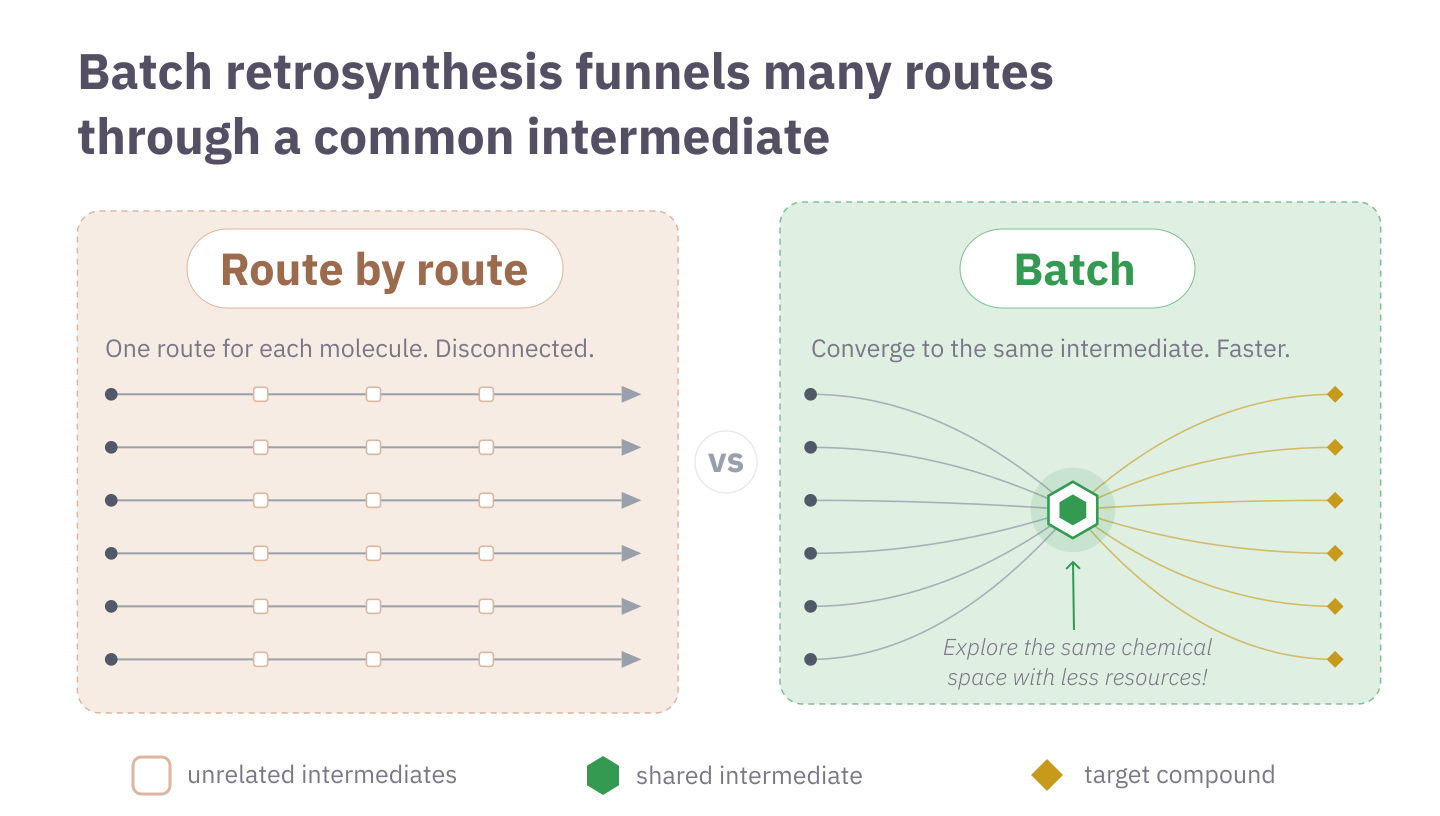
In this case, the objective is finding a key molecule that allows you to prepare several targets by using the same experimental protocols. It is literally killing several birds with the same stone! (or molecule, in this case). The process of finding these synthetic routes is called batch retrosynthesis.12
Why is batch retrosynthesis so powerful? The benefits are clear:
- It’s more amenable to automation.
- It’s more parallelizable.
- It reduces the need for different starting materials and reagents.
Selenium solves the problem
Here comes B12’s Selenium: our best-in-class agentic system for retrosynthesis. Selenium can understand these batch requirements and design synthesis with this idea in mind. Let’s see a practical example we ran ourselves.
We gave Selenium a batch of 100 target compounds through an assistant connected to our Selenium MCP and simply asked it to find a synthesis for each molecule. Selenium proposed a synthesis for each one, and in addition found a shared intermediate in 85 of the 100 routes. That’s already useful, but the true power of agentic retrosynthesis is its malleability: if you want a common intermediate, just ask for it! We then used the same targets but explicitly prompted Selenium to steer each synthesis toward the specific intermediate that we had identified. This time it routed all 100 synthesis through it!
From there it is easier to take those molecules to the lab, execute the synthesis using the same protocols, and deliver the candidate compounds.
Your creativity is the limit
This is just an example of the capabilities of agentic synthesis. If you have specific constraints or needs that will make your life in the lab easier, you can simply specify them in plain natural language. The model understands those needs and aligns the proposed synthesis to your requirements. It is as if two chemists were talking to each other!
At B12 labs, we are unlocking new possibilities in complex molecular synthesis. Selenium is the first piece towards that mission: the engine that understands and plans the most difficult synthetic challenges. Agentic reasoning accesses the full context of the chemistry you want to execute.
You can try Selenium for free. Let Selenium do what it does best: making the molecules you need.
References
- Fromer & Coley, “An algorithmic framework for synthetic cost-aware decision making in molecular design,” Nature Computational Science 2024.
- Torren-Peraire, Verhoeven, Herman, Ceulemans, Tetko & Wegner, “Improving route development using convergent retrosynthesis planning,” Journal of Cheminformatics 2025.